Jassaira Diaz Melgar
Clemson University
December 2026
Study Abroad: Taiwan 2025
In the Summer of 2025, I had the opportunity to study abroad in Taiwan for two months. I took Chinese language and Chinese culture courses at 中原大学 (Chung-Yuan Christian University), while engaging in excursions, student activities, and an internship as well.
Below, you will find a reflection of my time in Taiwan.
It’s Monday, July 14, 2025, and I’m tearing up as I read the letter my friend Mia gave me when we hugged goodbye at the Taoyuan International Airport entrance. There are so many things I am processing at this time. Among them, these are the ones that stand out the most:
1. I am able to read an entire letter written in Chinese, albeit I did stumble a couple of times when coming across traditional characters as opposed to simplified ones.
2. I was able to interact with the Taiwanese airport workers with minimal translation aid from Mia. I understood when they asked me for my passport or to weigh my luggage.
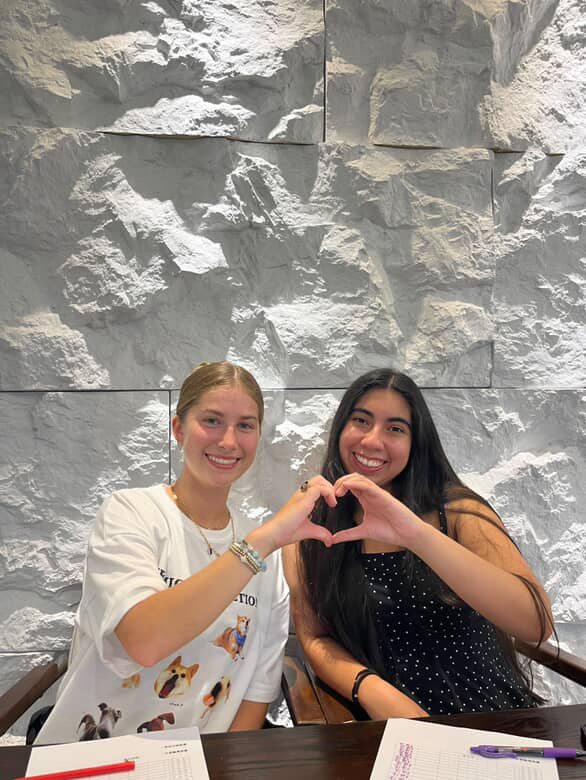
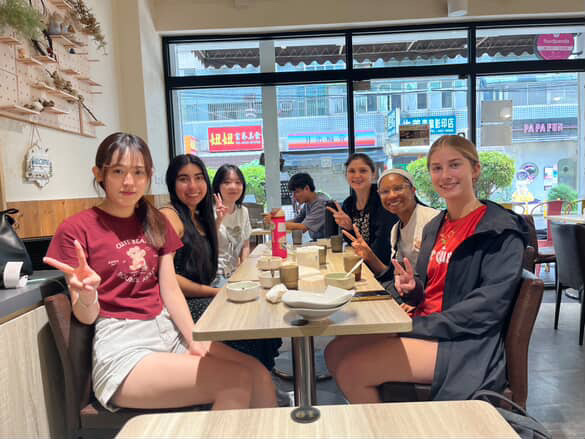
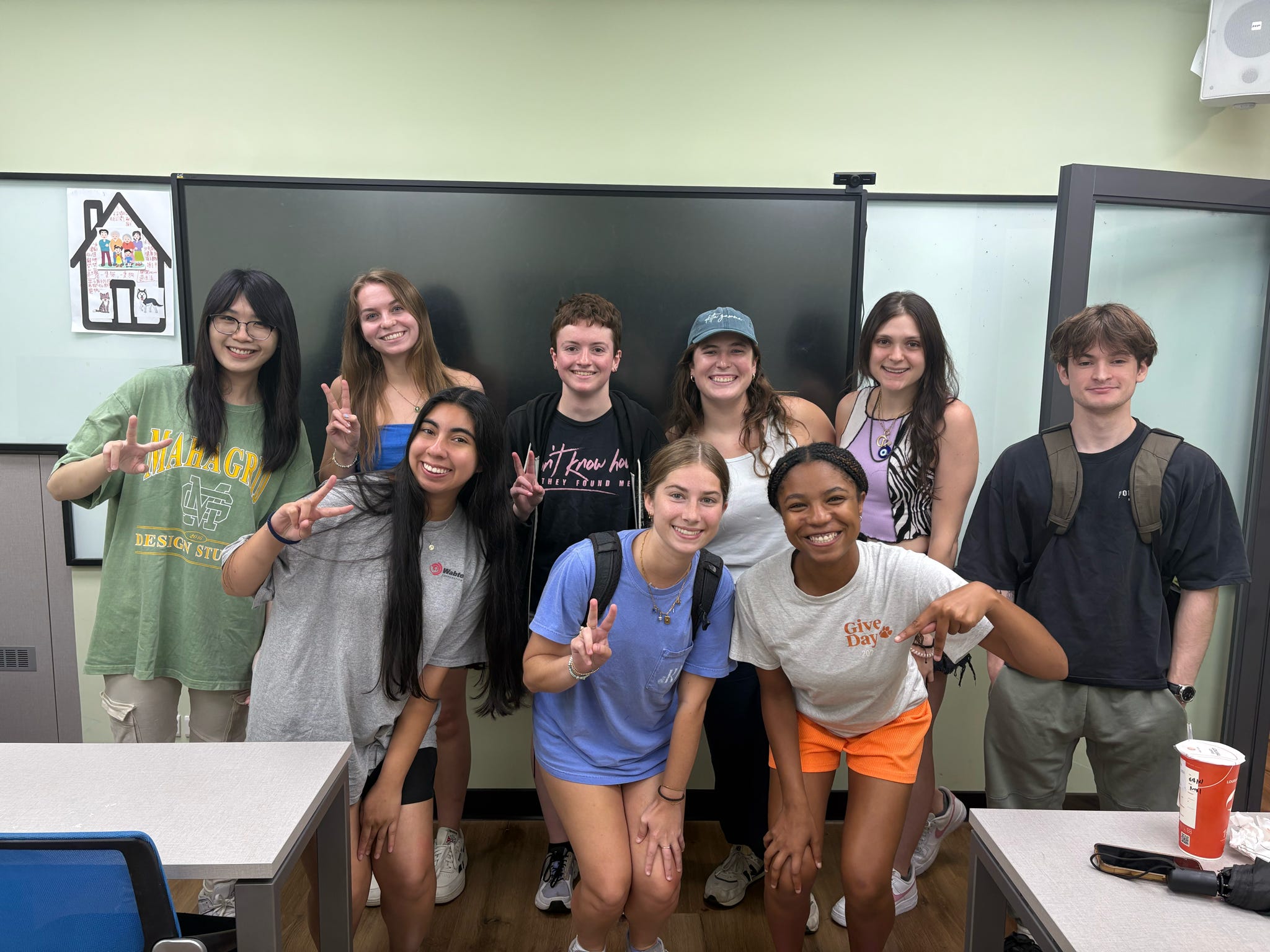
3. I am quite sad to be saying goodbye to my friend Mia, who two months ago was a complete stranger. After being a stranger, she was then my study abroad guide. But at a certain point, she became a friend, one whom I will stay in touch with even after my trip.
4. I somehow, not only survived, but thoroughly enjoyed a two-month study abroad trip across the globe in a country that I’d never been to in which a language which I am not entirely confident in is widely spoken. Furthermore, I am extremely sad to be leaving this country that welcomed me with open arms. It’s crazy to think that two months ago, I was actually sitting in the Charlotte Douglas International Airport, crying because I already felt so homesick, despite not even having left the U.S. yet.


I knew I was going to study abroad at some point ever since I became a student at Clemson. I was always looking forward to it, and I always had two main goals in mind. Survive. Learn more Chinese. That was it. I never really considered how many different cultural differences I would encounter nor how these would play into my language learning experience as well. By the time I had completed my study abroad trip, I realized that much of my time in Taiwan was spent on trying to learn how Taiwanese people live and interact with each other, how this plays into their verbal and nonverbal communication, and what I could do to respect and appreciate the culture. Although language learning was still a priority, it also became a supplement to my cultural immersion and learning.
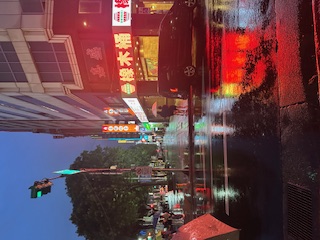
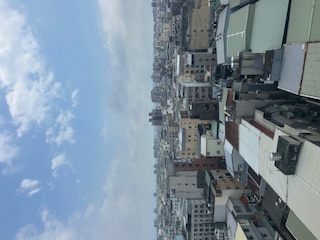
My first couple of days in Taiwan were spent marveling at everything new around me. Or, at least it seemed like everything was new. Look at all these restaurants! Look at all these convenience stores! Look at all the pedestrians! Reflecting back on this, the truth is that there weren’t that many physical differences between the U.S. and Taiwan, or even if there were, the differences weren’t as remarkable as I was making them seen.
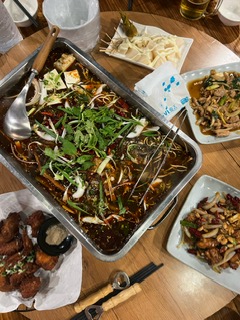
We have plenty of restaurants in the U.S., as well as convenience stores, pedestrians, etc. What I didn’t understand back then, but do now, is that what I really was noticing were the cultural differences interweaved with the physical aspects of the country. Why of course we have many restaurants in the U.S., but the way Americans behave at a restaurant can be very different from how the Taiwanese do. It was quite common—to my delight—for Taiwanese people to eat alone at restaurants, often watching a show or movie on their phones (with headphones on, of course). I absolutely loved this and partook in the activity very often myself! In the U.S., however, I feel very self-conscious doing this, as eating out in restaurants is almost always a social activity, intended to be done with at least one other person. I think this is particularly true for younger people. Furthermore, even when there are larger groups eating in restaurants in Taiwan (which is also common; you don’t only see individuals), they are very rarely rambunctious or loud. More often than not, us Americans were the loudest ones in a restaurant. And perhaps, to us, we were not even being that loud, but we definitely surpassed the customary noise level in restaurants. Fortunately, we were often forgiven (at least I hope so) because it is understood by both the Taiwanese that this is a very American behavior, or in other words, a cultural difference between the U.S. and Taiwan.
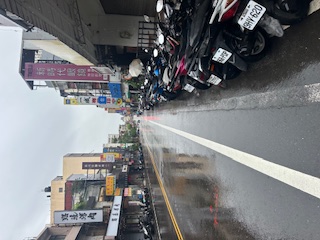
I remember being surprised about how people walked everywhere. There were so many pedestrians! This isn’t necessarily uncommon in the U.S as a whole, but it is uncommon in smaller, less-urban parts of the U.S., such as Clemson. Campus here is very walkable, but that isn’t the case for the rest of Clemson. In Taiwan, though, I felt like it was so easy to get anywhere! There was no need to search for backroads or take a 20-minute detour in order to avoid having to walk on the highway. In fact, it was probably easier to walk somewhere than having to drive or take a bus there. Thus, there were many more pedestrians than I was accustomed to.
Not only is there a numerical difference in the amount of pedestrian traffic, but there is also a more nuanced, cultural difference here. The interesting thing is that this same cultural difference applies within the U.S. as well. The Southern part of the U.S. is known for being more hospitable and friendly. I remember growing up, it was normal to say “Good morning/afternoon/evening” or “How’s it going?” to someone you walked by, even if you had never met this person before. It was considered manners. Yet, this isn’t really true for the more Northern parts of the U.S., nor is it really true for Taiwan. People there are much more reserved, and you might get a weird look if you try to greet everyone you pass. Now, this doesn’t mean that they are unfriendly or unkind.
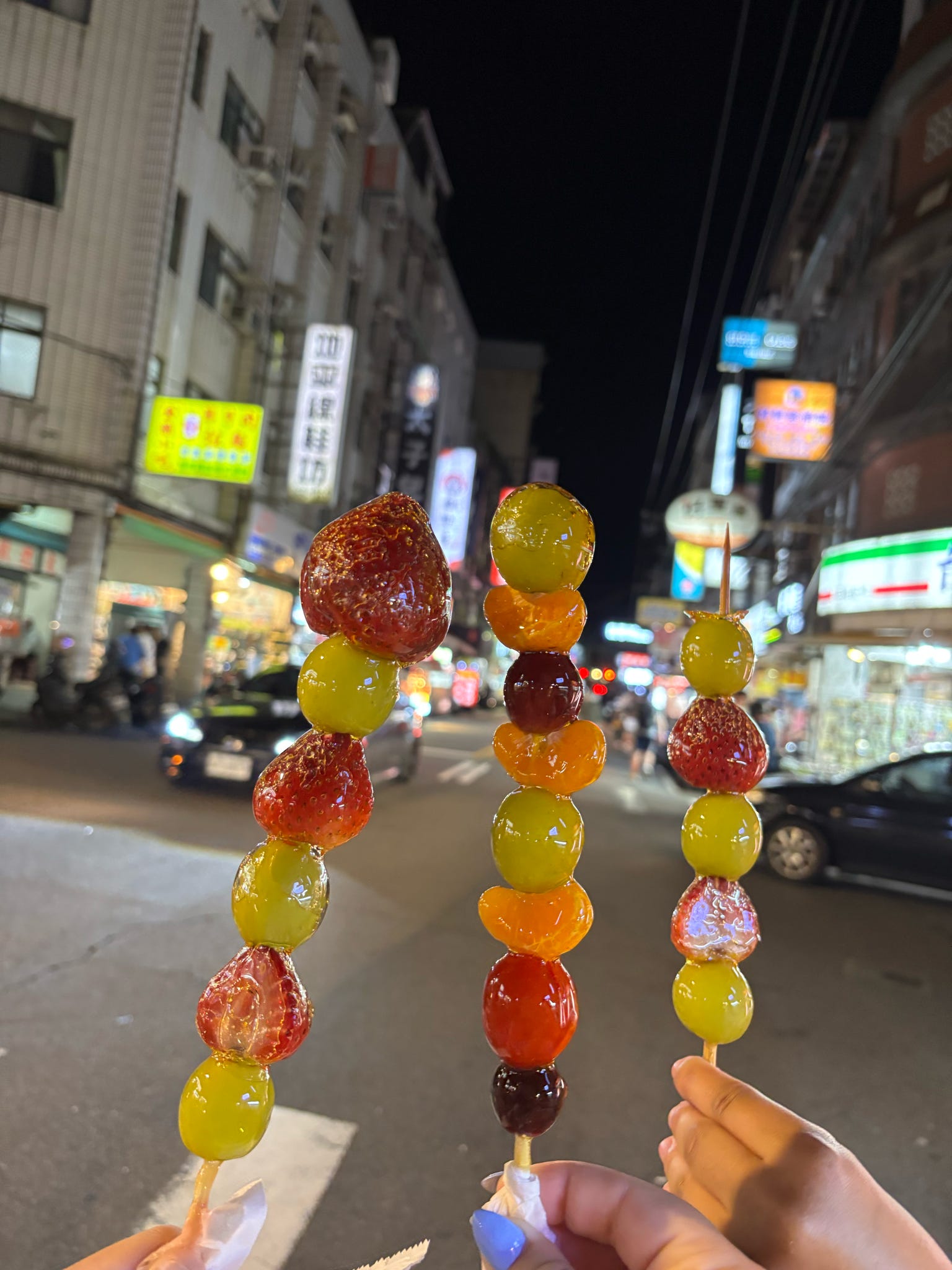
I remember talking to many lovely Taiwanese people, who often complimented my Chinese skills or asked about where I was from, but only after there was a reason to have a conversation. Perhaps I bought something from their night market stall, or I apologized for accidentally bumping into them, but there was a reason to have a conversation. Once there was a reason to talk, I realized how entertaining, funny, and genuine the initially reserved Taiwanese person was! After accidentally bumping into her, a kind Taiwanese lady at the airport told me my Chinese was great (despite the fact that the only Chinese I spoke to her was“对不起”)! After helping me find the English menu at the campus McDonald’s, an enthusiastic Taiwanese student invited me to join his biking club for a Zhongli bike tour. Once even, my Uber driver suggested I get married in Taiwan (jokingly) and that he would help find me a Taiwanese husband! I shared many good laughs and pleasant exchanges with people who might have seemed “unfriendly” at first, according to my Southern U.S. cultural lens.
Perhaps the most important thing I learned is to always approach with an open-mind. Maybe some people are not kind and do not mean well, but I choose to believe that most do. Cultural differences will be a given anywhere you go, even within the same country or region. It is not a bad thing to want to learn about and adapt to other people’s customs. I had to learn to be quieter in public spaces. I had to learn that it’s normal to not utter a word to someone standing beside you or walking past you. I had to learn that getting dinner for the 7-Eleven down the street is a totally acceptable choice! Learning these things does not make me less American, but instead a more receptive one. Adapting to and appreciating new cultures is how you make the greatest memories and friendships while abroad.